His Words Left Me No Choice But To Listen
- abigail0269
- Jan 25, 2025
- 4 min read

Asaf was meticulous in ensuring we understood how miserable he was in the hostel. In nearly every session, I would open the document and find yet another sentence that cut straight through my heart:
"When can I leave here?""I hate it here.""I've been here for years; I choose to leave.""The hostel is crippling me."
Each of these messages felt like a punch to my chest. The pain of realizing how deeply unhappy he was — after all the years I had believed he was content — was almost unbearable. Sadness and overwhelming helplessness consumed me, yet his words gave me no choice but to confront the truth I had been avoiding: I had been holding onto the comforting illusion that he was okay because it was easier than facing the painful reality that he was suffering and I had missed it.
During one session, I received a WhatsApp from his therapist with a picture of what he had just written: "My medicines make me thirsty."
I immediately called the hostel nurse and asked her to bring Asaf a glass of cold water. In that same session, I learned for the first time that he preferred cold water. It surprised me. I had always believed he liked room-temperature drinks.
Her response shook me: "They've only just drunk water."
“That’s irrelevant” I replied,. “Asaf just typed that he's thirsty. Please could you go and give him some water.”
Ten minutes later, she returned my call, sounding honestly surprised. "He drank two full glasses of water."
"I told you he was thirsty," I replied. But in that moment, I understood — she doubted he was truly capable of expressing those words. She then explained that the hostel had a strict water protocol in place for residents.
I asked the question I should have asked two years earlier: "What happens if he's thirsty outside of those scheduled times? How can he receive a glass of water?"
At home, Asaf would go to the cupboard, take a glass, maybe bring me a bottle of cordial; or open the fridge and take out the milk. In the hostel he had no way to express his thirst; no way to ask for what he needed.
The realisation that Asaf could not drink water whenever he wanted hit me hard.
That was my breaking point. I understood how miserable he was in the hostel. I knew I had to find another solution for him — whether it meant a different hostel or bringing him home.
This was an extremely challenging task. We checked out other hostels, we considered the possibility of bringing him back home, and we kept bouncing back and forth between the two options. The fear and anxiety surrounding this were overwhelming and emotionally draining me. I finally found a hostel I believed was suitable, only to be told, "Sorry, there is no suitable day center for him, so we can't accept him at present."
One day during a typing session, Asaf wrote the words:
"I need to have the freedom of choice like every other person."
With a picture of the words he had just written in front of me, and with the understanding that Asaf now had a voice to express how he feels, I knew I was unable to ignore what he was saying. That was the moment I put my fears aside and made bringing him home a reality.
We live on a kibbutz, a rural, gated community. Asaf loves walking around the kibbutz and the fields surrounding it. Our community is based on mutual support. We can build him a tailored program that suits his needs. We can make this happen.
And with those powerful words he wrote, Project Bring Asaf Home was born.
The road ahead was filled with important tasks:
Renovate my house to create an additional bedroom for one of my kids.
Find a live-in carer for Asaf.
Arrange a suitable day center for Asaf.
Organize afternoon activities for Asaf.
The list felt endless, but I honestly believe it is possible. More than that, I truly believe Asaf will thrive once he's home. We'll finally be able to understand what causes his stomach issues, and help him gain weight.
Am I scared? Yes, I'm terrified. Am I anxious? Absolutely. Am I making the right decision? I think so... I know we have to give this a try. Now that Asaf can communicate his wants and needs, it makes everything a lot easier.
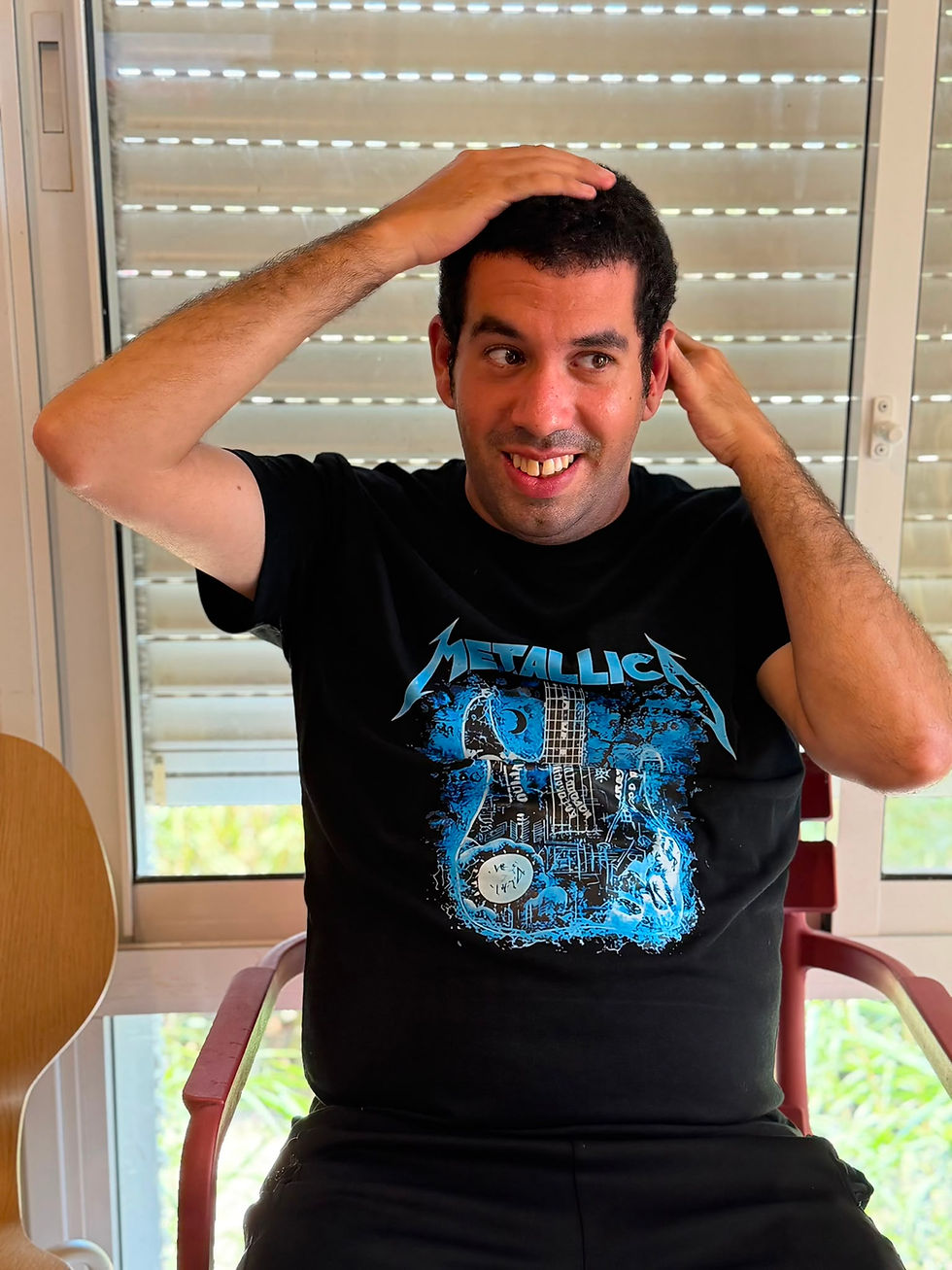
The day I told Asaf we'd made the decision to bring him home, I had never seen him so happy. He was grinning from ear to ear. This is what he typed:
"It's about time. I'm coming home."
In his next session, he started with the words:
"I want to thank Mummy for taking me out of here, for saving me."
I know I've made the right decision. I truly believe he'll thrive living at home and honestly, I can't wait to have him home.
I want people to look at Asaf and see past his autism. I want them to presume competence, and talk to him like they would to any other 24-year-old — even if they don't receive a response. For too many years, Asaf was denied the education and intellectual stimulation he deserved, and now he’s thirsty to learn. I wish for people to take him on walks, share their thoughts, and speak with him about topics that interest them. I know it can feel challenging to have a one-way conversation, but Asaf will gain so much from being spoken to with respect and curiosity.
And as Asaf so eloquently put it, ‘It’s about time. I’m coming home.’ And we are ready to make that home a place where he can finally spread his wings.
* The picture above was taken after I told him that he's coming home....


Comments