Presume Competence
- abigail0269
- Jan 25, 2025
- 4 min read
I’ve come to realize — it’s time. Time to open my mouth, my mind, and my heart to share with you the incredible roller-coaster journey I’ve been living. Just eight months ago, I discovered a whole new world of communication for non-verbal individuals with autism — a world I never knew existed.
Before I dive into this transformative experience, allow me to introduce myself. My name is Abigail Fidler. I was born in Manchester, UK, and made the life-changing move to Israel in 1996. I’m bilingual… well, almost! I like to say I speak 90% English and 90% Hebrew, which sometimes leads to hilarious mix-ups that my kids never let me live down. In fact, my daughter loves sharing my linguistic blunders on Instagram, and honestly? I love it — it’s part of my authentic self.
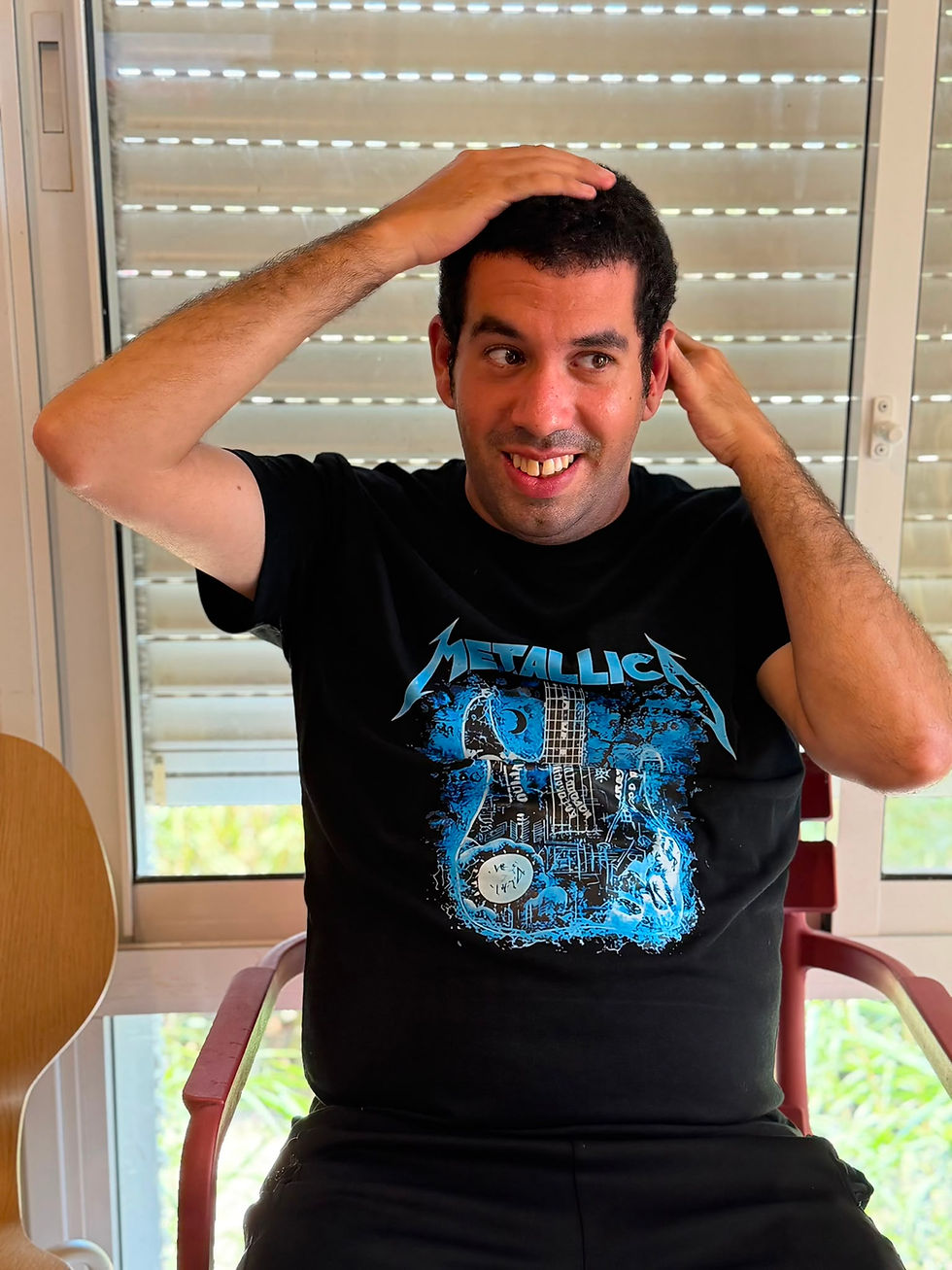
I’m a proud single mom of five absolutely phenomenal kids. My eldest, Asaf, is non-verbal and lives with autism. His journey, our journey, has shaped my life in ways I could never have imagined.
I’m naturally drawn to optimism — a habit of seeing the glass as half full, even when life feels heavy. When faced with challenges involving Asaf, I make it a point to focus on just one positive thread, no matter how small. What’s truly remarkable about this practice is how it expands — like a ripple in a pond. The more good you seek, the more it reveals itself, filling your heart with gratitude and opening your eyes to beauty in the most unexpected places.
I knew from the very beginning of my pregnancy that something wasn’t quite right. Asaf didn’t move much, and I found myself resorting to eating an alarming amount of chocolate just to feel him stir. No surprise, I ended up gaining 20 kilos during those months.
When Asaf was just three months old, the convulsions began. They weren’t dramatic at first — no flailing arms or legs. It started subtly, with his lips moving like a fish gasping for air, then his eyes rolling back, and finally, his tiny body freezing in place. Eventually, he was diagnosed with epilepsy. The doctors prescribed the only medication available for babies, even though it was known to delay development. There was no choice, they said.
By the time Asaf was six months old, I found myself sharing a fear that had been quietly growing inside me. I looked into his pram one day and confided in a friend: “Even though he laughs so much, I think he has autism.” She dismissed my concerns, brushing them away with comforting words, but deep down, in my gut, I knew I was right.
Asaf’s development unfolded slowly, with one delay following another. He suffered from hypotonia, crawling only at 14 months and taking his first steps at two years old. But despite the challenges, he radiated joy. His laugh was infectious, the kind that could light up a room and warm your soul. He wasn’t particularly drawn to building blocks or other typical toddler activities, but he loved being tickled. That laugh… I can still close my eyes and feel the warmth it brought to my heart.
Over the years, Asaf’s communication remained minimal — far more limited than I had ever imagined it would be. It became a constant guessing game, trying to piece together his needs, his feelings, his thoughts. We thought we understood his world, but as I would come to learn, there was so much more to Asaf than met the eye.
The most challenging moments are when he’s in distress, he’s crying, his face etched with pain, and I can see he’s suffering. From what? I have absolutely no idea. He has no way to tell me, no words to bridge the gap between his pain and my desperate desire to help. Each time, I’m left feeling helpless, broken, and utterly useless. The sadness is overwhelming, the frustration sharp, and the guilt unbearable. It breaks my heart, over and over again, every single time, with no end to the ache
Asaf suffers from Dyspraxia, or Developmental Coordination Disorder (DCD), which is a neurological condition that affects motor coordination, planning, and the ability to perform movements in a smooth, sequenced manner. In autistic children, dyspraxia can make tasks like writing, using communication devices, tying shoes, or even gestures and facial expressions more challenging, further complicating their ability to interact with the world and express themselves effectively.
Eight months ago, my life was turned completely upside down when Asaf began communicating through typing, using a method developed by Yael Cohen. You can read more about it here
Everything I had been led to believe about Asaf shattered into tiny pieces. My “cognitively impaired” son turned out to be incredibly intelligent — he had simply been trapped in his autistic brain and body for the past 24 years, with no way to communicate.
Stop for a moment and imagine how that must have felt for him: understanding everything happening around him but being unable to respond or express himself because his body and brain held him captive. The strength it must have taken to endure that is nothing short of extraordinary.
The frustration he must have felt — living with thoughts and emotions he couldn’t share — was likely immense. This perspective sheds light on the behaviors often seen in autistic individuals, offering a profound understanding of their struggles and resilience.
I’ve come to understand that my purpose is to raise awareness about communication through typing and to shed light on the incredible world of non-verbal communicators. It’s clear that we need to adapt our world to theirs, not the other way around
When I asked Asaf for his permission to share our journey, his words resonated deeply: “It’s important that you develop the understanding of the public.” This is my mission — to bridge the gap and foster understanding.
Join me on this journey of discovery. Together, we can create awareness and open the door for countless non-verbal individuals to finally have the opportunity to express themselves and share their voices with the world.



Comments